
What Makes a Good Halloween Haircut?
A barber usually weighs four things before recommending anything:- Your natural hair. Texture, density and growth patterns decide what’s realistic. A design that looks crisp on thick, straight hair can be harder to read on very fine hair, and results vary from head to head.
- The costume. The cut should work with the outfit without depending on it.
- Life after Halloween. Think about how it looks in three weeks, and whether work or school will have opinions.
- Detail versus effort. Intricate designs take longer, call for more skill, and soften as hair grows.
10 Halloween Haircut Ideas Worth Trying
These range from subtle to bold. Some are shaved designs, some are good haircuts with a seasonal finish, and a few are cuts you’d keep for months.1. Spider Web Fade
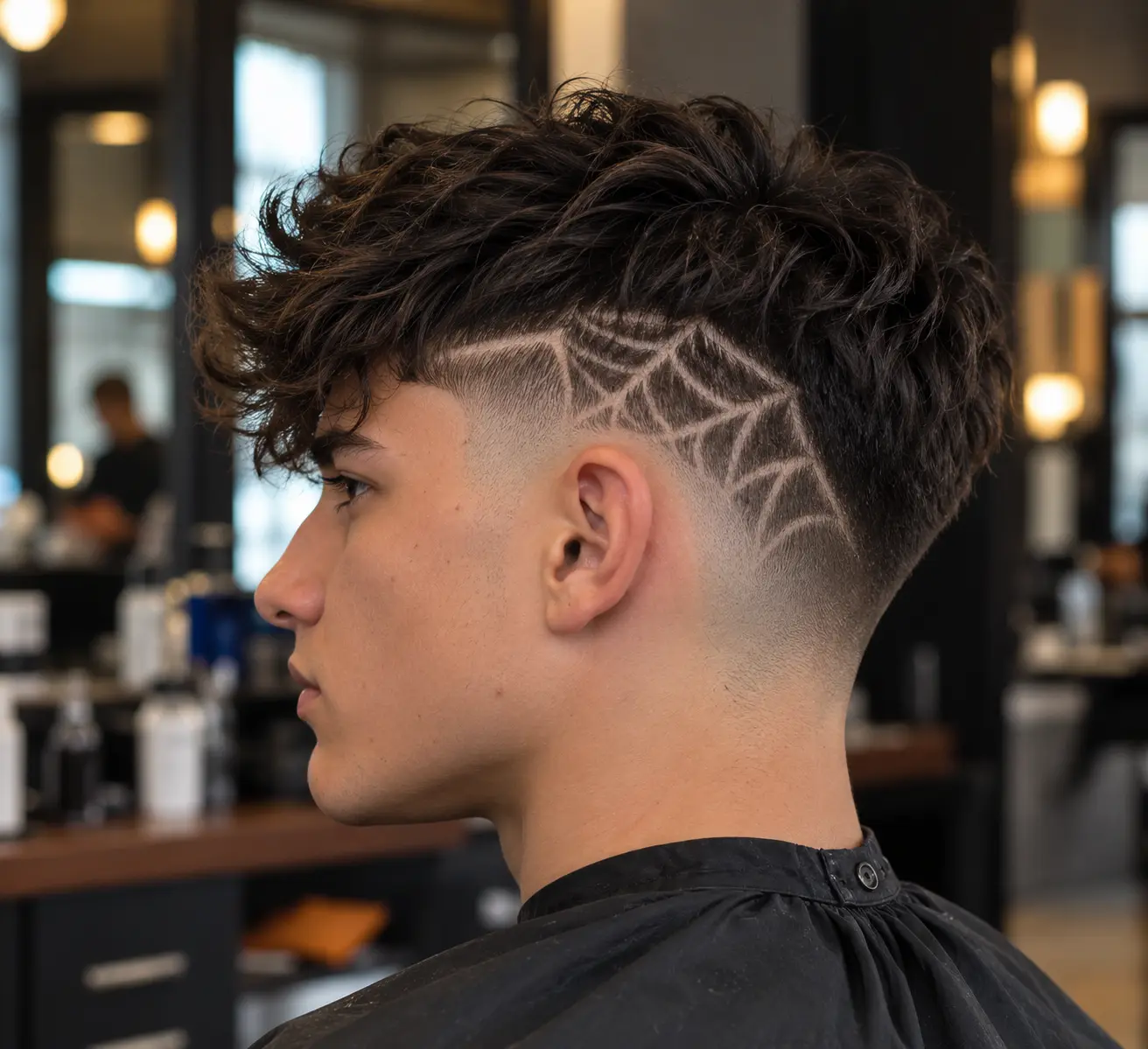 A spider web haircut is usually cut into the side of a fade, behind or just above the ear, where the hair is short enough for fine lines to show. The fade you choose decides how visible the web is. A skin fade, which goes down to the skin, gives the most contrast. A low taper or a fade left at a longer guard length shows much less detail.
Placement matters as much as the fade. The web needs a flat, open area, and a curved hairline, a cowlick or a prominent ridge can bend the radiating lines out of shape. Dense hair generally holds crisp lines. Thin or patchy areas can make the web look broken, so a barber may move the design or simplify it.
Texture and skin come into it too. On tightly coiled hair, close-shaved lines can look very sharp against the skin, but close shaving can cause razor bumps or irritation for some people. Tell your barber if that’s you. Fine line work also takes longer than a standard fade, so ask about appointment time.
Hair growth varies, but the lines typically look softer within a week or two, and sooner on fast-growing hair. Once the design blurs, you’re left with a fade you can have refreshed or tidied into a plain cut. Bring a reference photo, ideally on hair similar to yours.
2. Bat Design Haircut
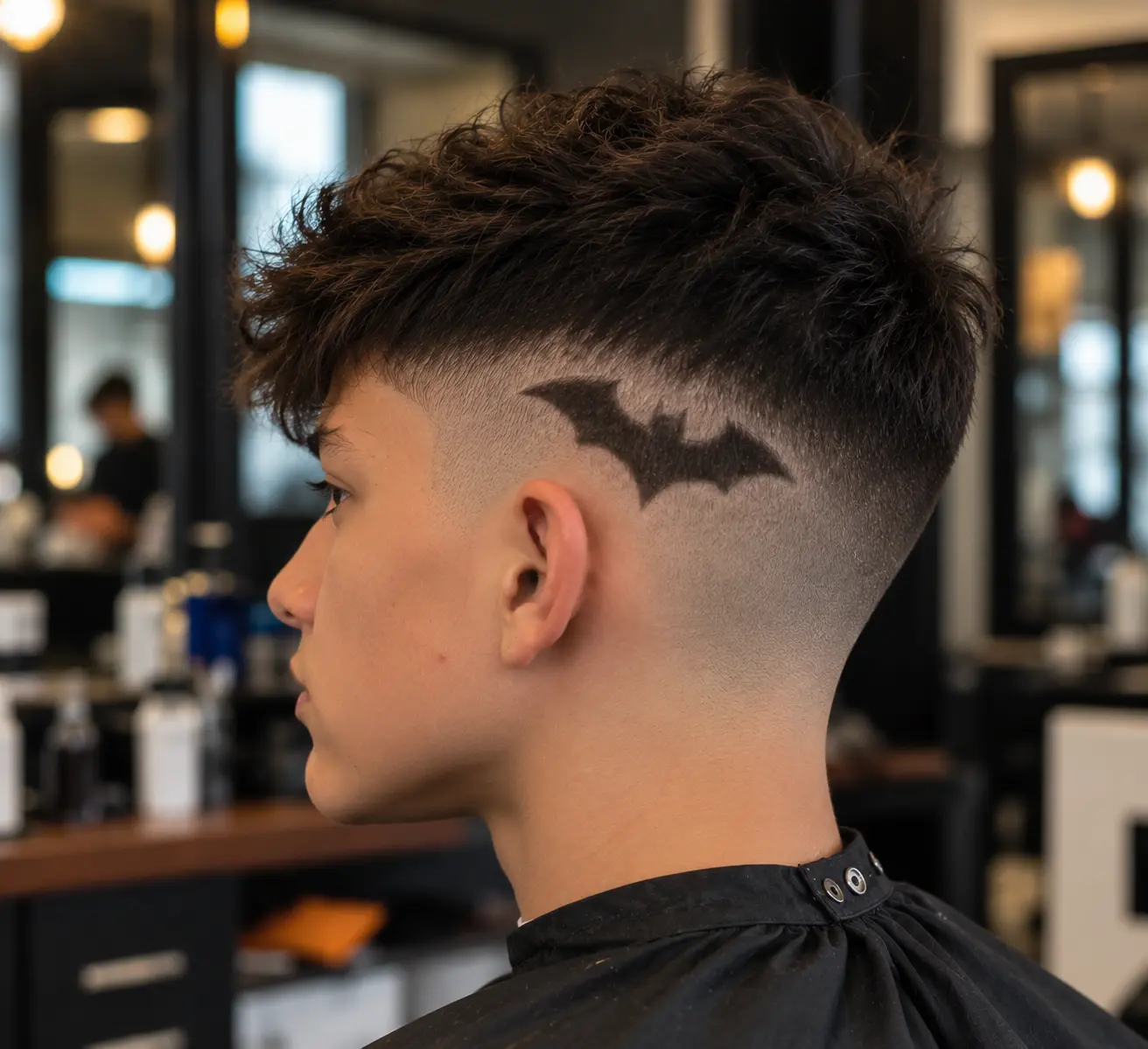 A small bat is easier to pull off than most designs. It sits on a faded or shaved side panel, and the wings need enough contrast against the surrounding hair to read clearly. Placement is everything: too low and it’s lost behind the ear, too high and it fights the fade line.
Keep it simple, with two or three clean wing points rather than a detailed silhouette. Not every barber offers hair art, so confirm before you book. When it grows out, the fade underneath carries on as a normal cut.
3. Skull-Inspired Hair Design
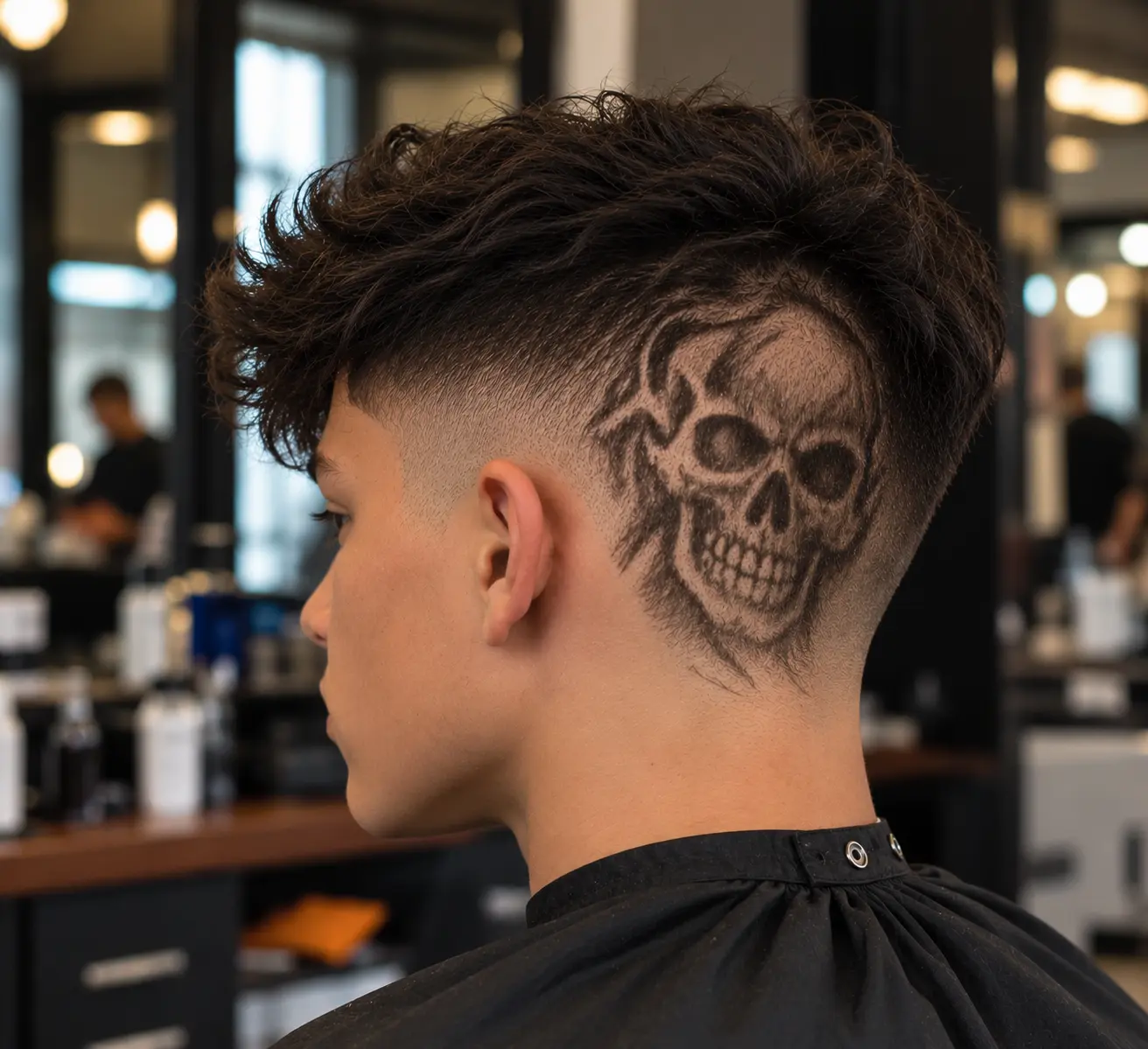 There’s a big gap between a simple skull outline and a portrait-style skull with teeth and shading. The outline is realistic for a barber who does design work. The detailed version needs a large, flat working area, short and even hair, and someone with real experience in freehand detail.
Hair length matters here. Very short hair shows lines clearly but leaves little room for correction. Longer hair hides detail and can look muddy. Density also affects how solid the “dark” parts of the skull look against the shaved parts.
Be realistic: a reference image is a goal, not a guarantee, and complex artwork may not fit inside a standard haircut appointment. If the barber suggests a simpler version, that’s usually good advice. As the design grows out it can look patchy, so many people plan to have it tidied into a plain short cut within a couple of weeks.
4. Vampire Slick Back with a Clean Fade
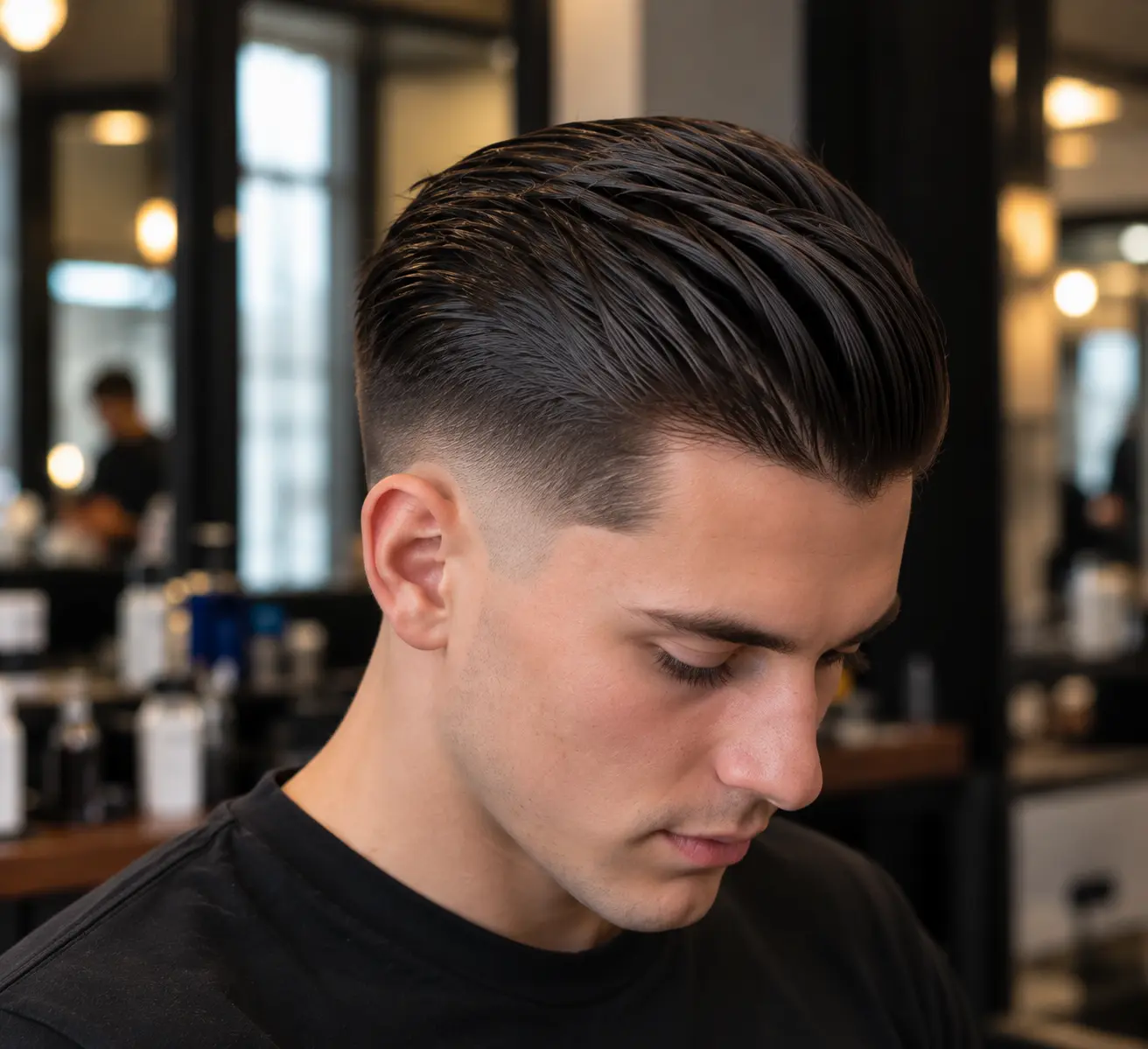 The slick-back is styling. The fade or taper underneath is the haircut. How much length you need on top depends on your texture and growth direction. Straight hair may lie back with roughly three inches, while wavy or thick hair often needs more. A strong cowlick at the front can push against the direction you want, and sometimes the fix is a little more length or a blow-dry before product.
The fade you pair with it changes the feel. A taper reads classic and softer. A skin fade is sharper and more dramatic, which suits a costume, but it grows in faster visually.
Product choice matters, and results vary. Pomade generally gives a glossy, flexible finish, and some are easier to wash out than others. Gel tends to dry harder and can flake if you use too much or restyle it. Start with a small amount on slightly damp hair. This is one of the more useful picks, since it stays wearable long after Halloween, whether you’re in a suit or a hoodie.
5. Textured Crop
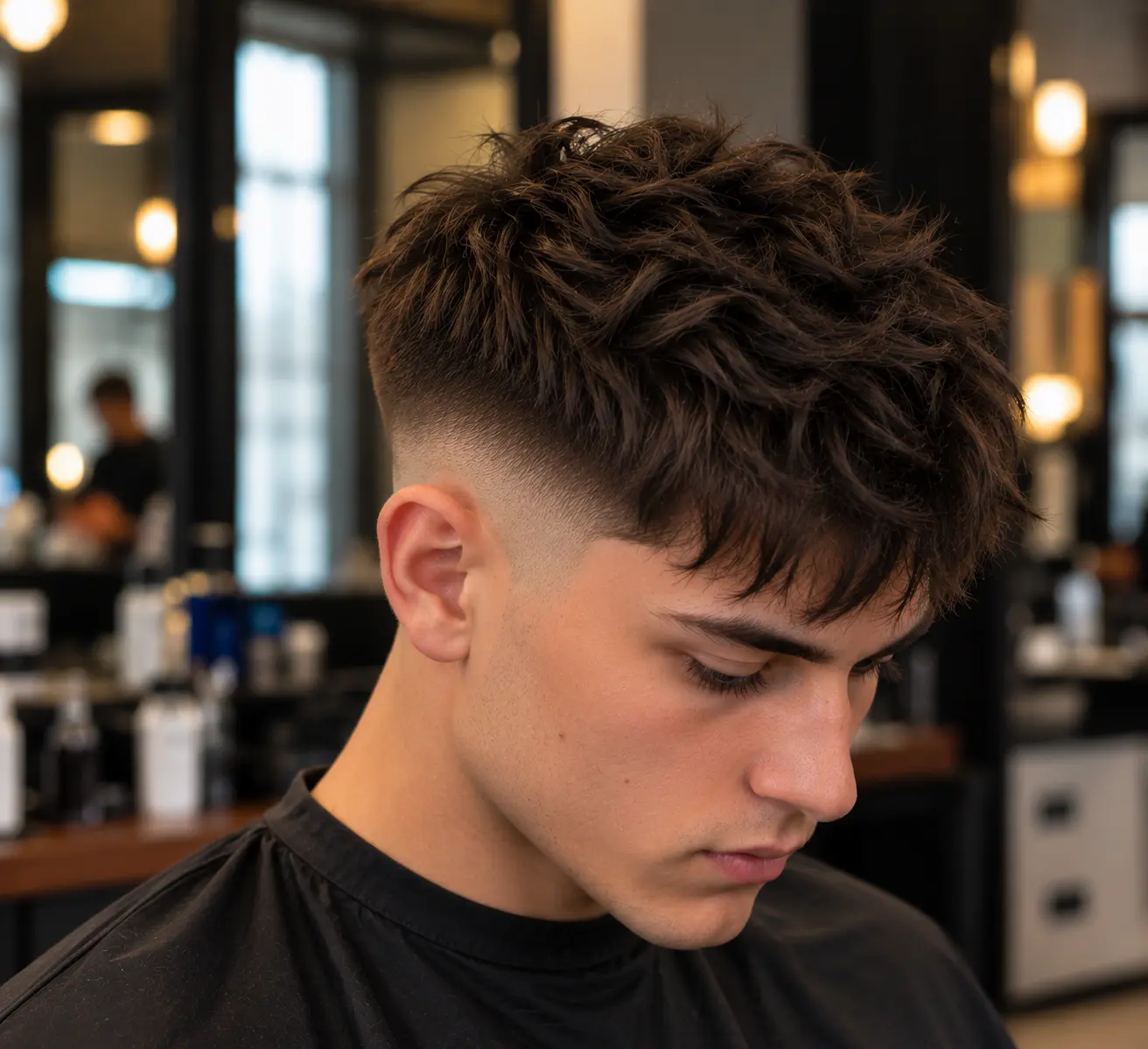 Short sides, a bit of length on top and natural movement. It tends to suit straight, thick or wavy hair and is quick to style. Work a small amount of matte clay or paste through dry hair and rough it up for a messier, costume-ready finish.
Fine hair is the exception, since too much product can weigh it down and show scalp. Use less than you think you need. Nothing about this cut is seasonal, so it’s easy to keep.
6. Mohawk or Faux Hawk
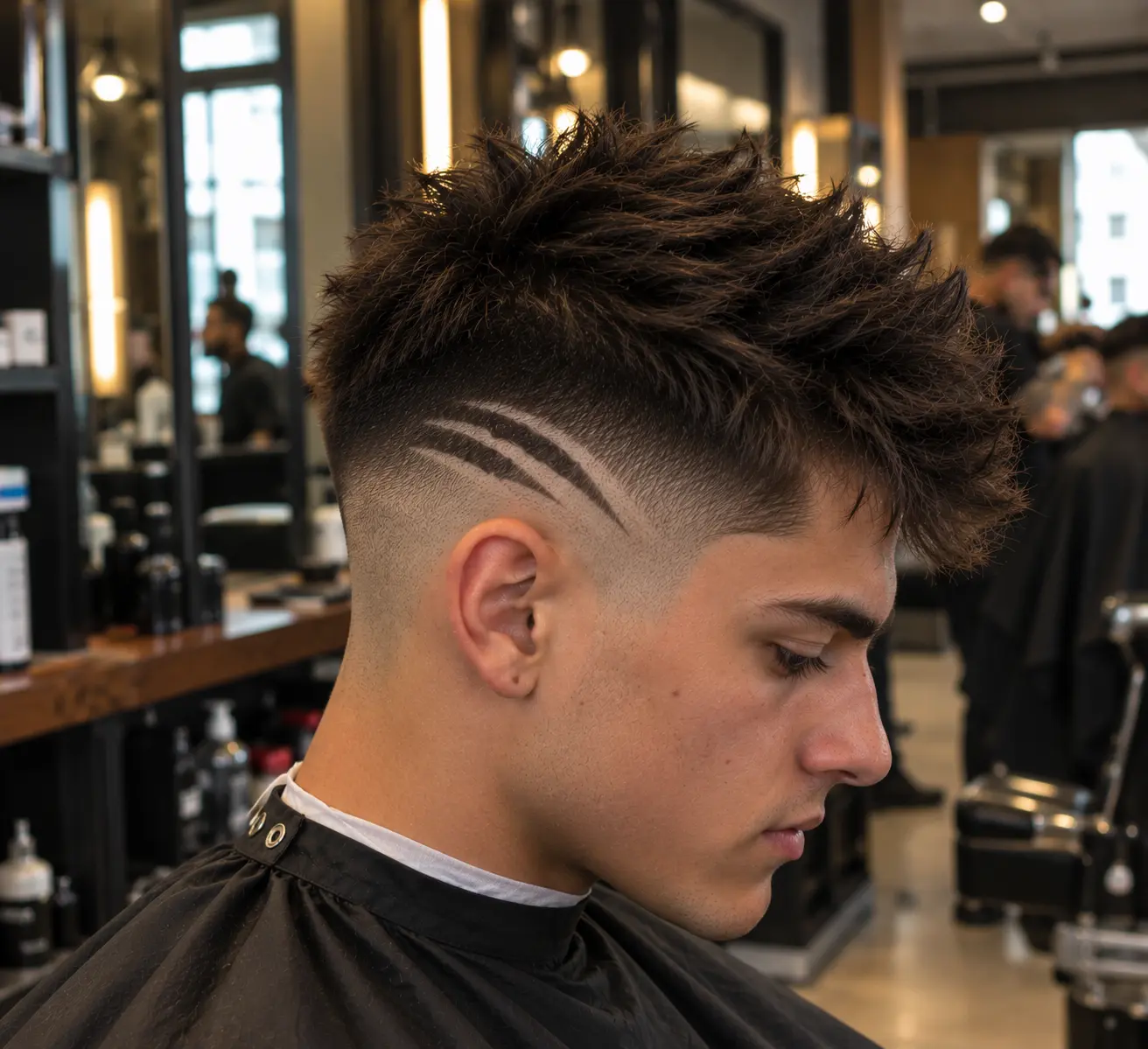 A traditional mohawk means clipping the sides short, sometimes to skin, and leaving a strip of length on top. That’s a real commitment, and the sides take weeks to grow back to normal. A faux hawk keeps more length on the sides and pushes the centre up with product, so it’s far easier to undo.
Both depend on top length, side contrast and hold. How tall the centre stands depends heavily on hair texture and density. Soft or fine hair often needs more product and sometimes a blow-dry, and may never reach the height in a photo. Very curly hair can do a mohawk well with the right length, but it’s styled differently. If you need to look conventional on Monday, the faux hawk is the sensible choice. Strong-hold products can be tough to wash out, so use shampoo thoroughly afterwards.
7. Buzz Cut with a Halloween Hair Design
A buzz cut is a simple canvas for a lightning bolt, a stripe or a small motif. Guard length decides how the design reads. In North American clipper sizing, a #1 guard leaves about 3 mm, a #2 about 6 mm, and a #3 about 10 mm. Designs show best when the surrounding hair is short but not zero, and the design is cut down to the skin or very close to it. Two cautions. First, shaved lines can’t be undone, and cutting too deep leaves a mark until the hair grows back, so simple shapes are safer. Second, a buzz cut shows everything: head shape, scars, moles and uneven skin tone. Some people love that and others don’t, so look at the idea in a mirror with short hair before committing. Think about the scalp in cold October weather, and about sensitive skin if the design goes down to bare skin. Pick a design that grows out cleanly without leaving an obvious gap. Growth rates vary, but many people see a noticeable change within two to three weeks.8. Peaky Blinders-Inspired Undercut
Short, tight sides with a noticeably longer top, brushed back or to the side. It differs from a modern fade because the sides blend less gradually, which gives that blunt, vintage contrast. Straight and wavy hair usually style easily. Naturally stubborn or thick hair may need a heavier product or a bit more length to stay in place. It needs no themed design, so it’s one of the easier costume cuts to keep afterwards.9. Modern Mullet
The modern mullet pairs tapered or faded sides with length at the back. Growth patterns matter more here than on most cuts. A strong crown, an uneven nape or hair that grows in different directions can make the back look accidental. A barber shapes the back length and the transition so the silhouette looks intentional. Wavy and curly hair adds natural volume at the back and needs different shaping than straight hair. Ask how it will look as it grows, too. The in-between stage of a mullet can be awkward. It’s a commitment, so make sure you like it as a haircut and not just as a costume. Unlike a spray or a shaved design, you’ll be living with it for months.10. Halloween Fade Haircut for Boys
For kids, think simple: a clean fade or short textured cut, maybe with one small shaved line. Comfort and patience come first. Sitting still for fine line work is a lot to ask of a young child, and the boy should want the design. Check school rules before anything visible. Parents looking for a kids haircut in Richmond Hill can start by showing the barber the costume or reference photo and asking what’s realistic for the child’s hair and age. A good base cut that lasts a few weeks usually beats elaborate artwork that’s gone in days.Which Halloween Haircut Should You Choose?
| Haircut | Best Suited For | Styling Effort | Everyday Wearability | Special Considerations |
|---|---|---|---|---|
| Spider Web Fade | Dense hair, short sides | Low | Medium | Fine lines soften within days to weeks; extra appointment time |
| Bat Design | Faded or short side panels | Low | High | Confirm hair-art availability |
| Skull Design | Short, dense, even hair | Low | Low–Medium | Detail depends on barber, area and hair |
| Vampire Slick Back | Medium-length hair that lies back | Medium | High | Cowlicks, growth direction, product choice |
| Textured Crop | Straight, thick or wavy hair | Low | High | Fine hair needs little product |
| Mohawk / Faux Hawk | Thicker hair with length | High | Low / Medium | Texture limits height |
| Buzz Cut + Design | Most hair types | Low | Medium | Can’t fix a design cut too deep; shows head shape |
| Peaky Blinders Undercut | Straight or wavy hair | Medium | High | Stubborn hair may need stronger hold |
| Modern Mullet | Hair with usable back length | Medium | Medium | Growth patterns; awkward grow-out stage |
| Boys’ Halloween Fade | Most kids’ hair | Low | High | Comfort, school rules |
When Should You Get Your Haircut Before Halloween?
It depends on the cut. A sharp fade or shaved design generally looks best within a few days of the event, while the lines are at their cleanest. A more conventional haircut often looks more natural after a couple of days of settling. Booking and getting the cut are separate decisions. Book early, especially for a detailed design, since it may need a longer appointment or a quick consultation first. Then pick the cut date based on when you want it looking its best.Quick Checklist Before Your Barber Appointment
- Choose your Halloween costume or overall look.
- Save one or two realistic haircut reference photos.
- Check whether the model suits your current hair length and texture.
- Decide whether you want a temporary look or a longer-lasting cut.
- Ask whether your barber offers detailed shaved designs.
- Confirm whether the design requires additional appointment time.
- Mention any skin sensitivity or history of razor bumps.
- Consider work or school expectations after Halloween.
- Ask which styling product you’ll need at home.
- Book early enough to allow for consultation and adjustments.